Abstract
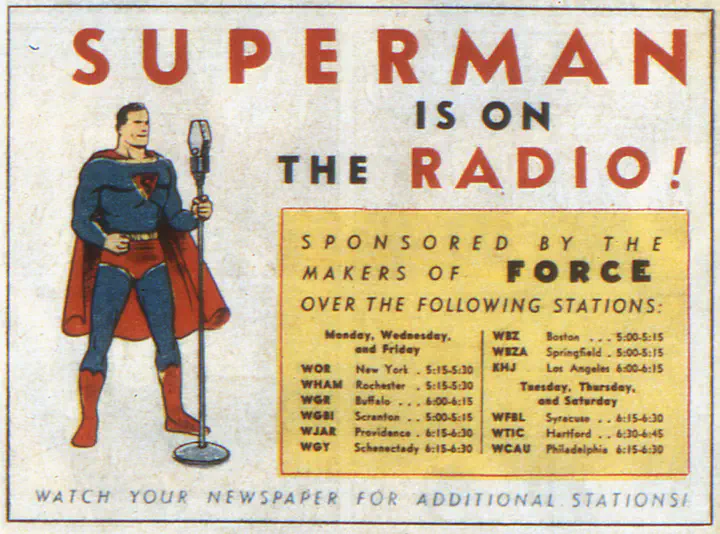
We examine whether childhood exposure to fictional stories can shape long-run political preferences. We study an unprecedented experiment in post–WWII United States: in 1946, amid entrenched racial divisions, the popular children’s radio series The Adventures of Superman suddenly replaced its fantasy plots with stories confronting intolerance in American society, explicitly designed to shape moral values among young listeners. This within-program shift generated variation in potential exposure across cohorts and locations, allowing us to isolate the causal effect of changing narrative content during childhood on later outcomes. We find that childhood exposure increased support for civil rights decades later, in the 1960s and 1970s, when racial equality was a contested dimension of American politics. These effects extend to support for civil rights leaders, political engagement, and lower institutional trust. At the county level, greater exposure increased political mobilization. Fictional narratives can therefore be a lasting channel of political socialization.
Previously circulated as “Media Narratives and the Rise of Civil Rights”.
Media Coverage

Giuseppe Musillo
PhD Candidate in Economics
I am a PhD candidate in economics at Tilburg University. My research asks how technology changes creative work and how narratives change political behavior. I am on the 2026–27 economics job market.